

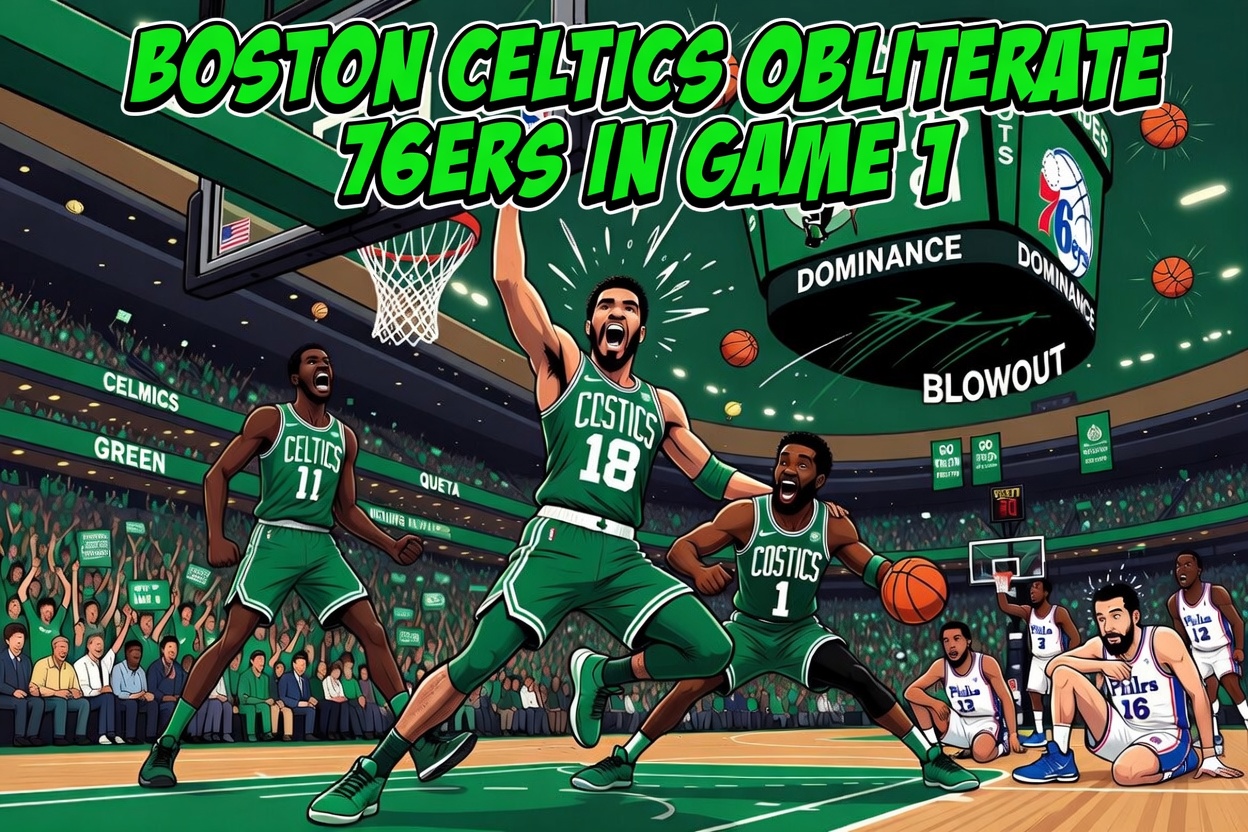
Game 1 of the 2026 NBA Eastern Conference first-round series between the Boston Celtics and the Philadelphia 76ers was not just a basketball game; it was a two-hour masterclass in dominance wrapped in green and white. The Celtics shredded the 76ers 123-91 in front of a roaring TD Garden, and the scoreline honestly feels polite given how lopsided it was. If this had been a boxing match, Philadelphia would have been saved by the bell in the second quarter, and the ref would’ve been checking for a pulse in the fourth.
What made this blowout even more satisfying for Celtics fans is how beautifully it blended ruthless efficiency with a hint of showmanship. Jayson Tatum, making his triumphant return from an Achilles injury that had fans chewing their nails down to nubs all season, dropped 25 points, 11 rebounds, and seven assists like he’d been warming up for this performance in a secret underground lab. Jaylen Brown, never one to be overshadowed, chipped in 26 points of his own, and Neemias Queta—yes, THAT Neemias Queta—added 13 points, giving the TNT broadcast crew a chance to practice pronouncing his name correctly on live television.
The Anatomy of a Blowout
Let’s break down how a playoff game turns into a 32-point publicly televised therapy session for one team and a public shaming for the other. Boston never trailed. Not once. Not for a fleeting second. They opened up by punching Philadelphia squarely in the confidence with a first-quarter barrage that felt like watching a cat toying with a laser pointer—except the laser pointer was the Sixers’ defensive rotations.
The Celtics built a 35-point lead in the third quarter, which meant that by the time the final buzzer approached, Joe Mazzulla was conducting a 12-man symphony of garbage-time happiness. Even the bench warmers got to cosplay as playoff heroes, and Mazzulla got to rest his stars with enough time to maybe grab a post-game coffee before the press conference.
Tatum’s Return: Achilles? What Achilles?
The narrative entering this series was whether Tatum could regain his form after his Achilles injury. On Sunday, he didn’t just silence the doubters; he put them on mute and then casually deleted their social media accounts. Watching Tatum glide across the court was equal parts relief and revelation. He didn’t appear to favor his leg, his step-back three looked as smooth as ever, and his ability to both facilitate and score was a nightmare for the Sixers’ defensive schemes.
Post-injury performances are often judged by athletic explosiveness, but what stood out most was Tatum’s patience and decision-making. He read the floor like a seasoned chess master, dissecting double teams, rotating the ball to open shooters, and occasionally reminding the rim that he still owns it. If this is a preview of the series, Philadelphia might want to start researching off-season vacation spots.
Jaylen Brown: The Relentless Counterpunch
While Tatum’s return drew headlines, Jaylen Brown quietly administered the basketball equivalent of a flu shot—effective, unavoidable, and leaving the opponent feeling slightly woozy. His 26 points were delivered with the casual decisiveness of someone running errands. Three-pointers? Check. Mid-range pull-ups? Check. Thunderous drives that made Sixers defenders reconsider their life choices? Double check.
Brown’s role in this Celtics renaissance cannot be overstated. He thrives in the chaos Tatum creates, and against a Sixers squad that looked slow and disjointed, he burned their rotations like old filmstock. Every time Philadelphia hinted at a run, Brown was there with a momentum-killing bucket, as if he had a personal vendetta against hope itself.
The Neemias Queta Experience
Let’s take a moment to appreciate Neemias Queta. On a night where Boston flexed its star power, Queta’s 13 points may seem like an afterthought—but they were the sprinkles on this victory sundae. Every playoff team needs that unsung hero who steps in and says, “Don’t mind me, I’ll just casually dunk on your second unit.” Queta provided energy, interior presence, and a reminder that Boston’s depth is the kind that gives opposing coaches insomnia.
In a game where the stars shone bright, Queta’s performance was a delightful subplot—proof that Joe Mazzulla can comfortably reach deep into his roster without fearing an implosion. When your 12th man is getting buckets and the crowd is still fully engaged, you know things are going your way.
Philadelphia’s Long Night
From the 76ers’ perspective, this was the kind of game that coaches file under “Character Building” if they’re being optimistic, or “I Don’t Want to Talk About It” if they’re being honest. Joel Embiid looked frustrated, Tyrese Maxey was hounded into inefficient possessions, and the supporting cast was essentially a live-action demonstration of defensive indifference. If Philadelphia hopes to salvage anything from this series, they will need to reinvent themselves defensively and find ways to limit Boston’s ball movement.
It’s one thing to lose a playoff game. It’s another to spend 48 minutes watching the other team treat the court like a personal highlight reel. Game 1 may not define the series, but it certainly drew a very dramatic first draft.
Strategic Takeaways
Boston’s dominance wasn’t just about talent; it was about precision. They moved the ball with surgical intent, forced switches they wanted, and punished every defensive lapse. Joe Mazzulla’s rotation flexibility paid off, allowing him to keep the energy high without sacrificing execution. The Celtics also displayed a commitment to defensive pressure, particularly on Maxey, that completely disrupted Philadelphia’s rhythm.
- Relentless ball movement created constant open looks.
- Bench contributions ensured no let-up in intensity.
- Defensive switching neutralized Philadelphia’s best options.
If this formula holds, the 76ers will need near-perfect execution just to keep things competitive. Otherwise, the series may be over before Game 3 tickets are scanned.
Looking Ahead to Game 2
The Celtics have the luxury of entering Game 2 on April 21 with momentum, confidence, and the knowledge that they essentially played a perfect opener. Expect the 76ers to adjust—maybe throw more double teams at Tatum, attempt to speed up the game, or even tap into their bench for defensive spark—but Boston’s depth and composure make them a nightmare to strategize against.
TD Garden will be electric again, and if the Celtics come out with the same focus, Philadelphia may need to rely on a miracle or a motivational speech straight out of a sports movie to avoid a repeat performance.
Game 1 wasn’t just a victory; it was a declaration: the Boston Celtics are not here to play around, and they certainly did not come to extend the series for dramatic effect. For fans, it was a night of joy and humor—a reminder that when your team is locked in, basketball is both art and comedy. For the 76ers, it was a lesson wrapped in a scoreboard. And for everyone watching, it was proof that playoff basketball is back, and in Boston, it’s thriving.
Leave a Reply
You must be logged in to post a comment.