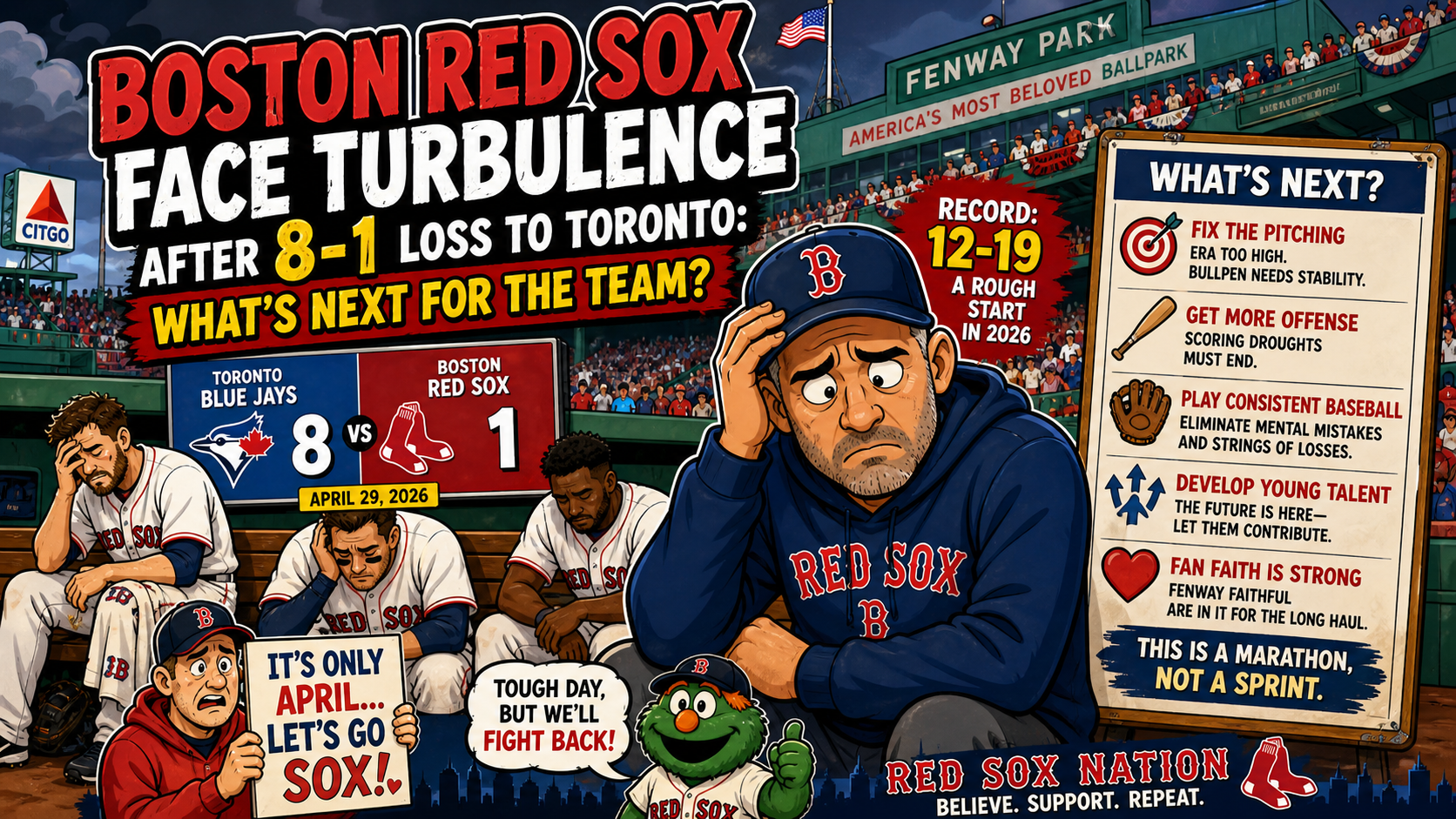
The calendar has finally flipped to May, and if you’ve followed the Boston Red Sox this year, you already know the 2026 season has been about as smooth as trying to parallel park a duck boat in a Nor’easter. But on May 1, Fenway Park offered a rare sigh of relief: the Sox downed the Houston Astros 3-1, thanks to rookie left-hander Jake Bennett’s poised debut and Jarren Duran’s three-run moonshot that landed somewhere near a hot dog vendor’s existential crisis. The victory nudged Boston to 13-19, which in the arithmetic of endless optimism translates to, “Hey, we’re only a long winning streak away from relevance!”
In a season where Red Sox fans have occasionally looked at the standings the way one looks at an ominous weather forecast—“Is that a tropical storm heading right for us?”—Friday’s game served as a gentle reminder that baseball is a marathon. And like most marathons, it’s equal parts inspirational and mildly absurd. If you squint hard enough, you can see a path forward where this team becomes the kind of scrappy underdog that both Hollywood and Fenway’s bleacher creatures adore.
Jake Bennett: A Debut Worth the Popcorn Calories
Let’s start with Jake Bennett, because if you’re making your MLB debut in Boston, you’re either about to become a local folk hero or a cautionary tale told over Dunkin’ iced coffee. Bennett chose the former, twirling five strong innings, allowing just one run, and looking largely unfazed by both the Astros’ lineup and the gravitational pull of Fenway expectations. His fastball had enough life to make Houston’s hitters mutter, and his poise on the mound suggested he’s been practicing his “I’m totally fine” face in the mirror for years.
There’s something magical about a rookie starter seizing his first moment. It’s the kind of performance that fuels midseason optimism and justifies endless blog posts dissecting arm angles, release points, and the metaphysical importance of throwing strikes. Bennett’s first win didn’t just pad the box score; it offered a fleeting sense that the Red Sox might have more in the tank than pessimists expected. And yes, it’s only one start, but remember: dynasties are built one baby step at a time, preferably with fewer pitching injuries than last season’s medical novella.
Jarren Duran: The Swing That Roared
The offensive hero of the night was Jarren Duran, whose three-run homer in the third inning made the difference and briefly sent the Fenway faithful into a state of blissful delusion. For a few shining minutes, it felt like the summer of 2018 again, minus the parade confetti and Mookie Betts sightings. Duran’s blast wasn’t just a display of raw power; it was a reminder that baseball rewards patience, timing, and the occasional decision to swing like you’re trying to launch a satellite.
In a season where Boston’s offense has been as consistent as New England spring weather—sunny one minute, snowing the next—Duran’s heroics were a welcome jolt. The team has been hovering near the bottom of the AL East standings, and any spark that can translate into series wins is worth celebrating. If Duran can bottle that swing and sprinkle it over the rest of the lineup, we may yet see Fenway turn into something other than a collective therapy session by July.
Chad Tracy: The Interim Era Begins
Interim manager Chad Tracy earned his first win at Fenway Park, and while no one is ordering him a bronze statue just yet, the victory surely tasted sweet. Managing the Red Sox is a job that requires equal parts tactical acumen and emotional resilience, not to mention the ability to field daily questions like, “Why isn’t this team winning the division by now?” Tracy’s debut in front of the home crowd offered a glimmer that he might steer this ship through the current chop, or at the very least, prevent it from capsizing entirely before the All-Star break.
There’s an inherent humor in baseball’s managerial carousel. Interim managers often feel like substitute teachers trying to keep the class from setting the lab on fire. But Tracy’s calm demeanor and willingness to trust young talent like Bennett suggest he’s ready to audition for something more permanent. If he can coax a few more wins out of this uneven roster, the “interim” tag might begin to feel like a formality rather than a forecast.
The Red Sox’s Rocky Road to Relevance
With a record of 13-19, the Red Sox are, to put it politely, in the “please don’t check the standings too often” phase of the season. Historically, teams have overcome worse starts, but it requires a cocktail of good health, breakout performances, and a dash of serendipity. The 2026 Red Sox haven’t quite found the recipe yet. But the ingredients are there: a few promising arms, a handful of bats threatening to wake up, and the eternal hope that the Yankees or Rays might spontaneously decide to take a sabbatical.
The analytical view tells us the Red Sox need both consistency and luck to climb the AL East ladder. Their run differential has wavered, their bullpen has been a coin flip, and their offense alternates between frightening and invisible. Yet baseball history is littered with teams that went from afterthought to contender in the span of a single summer. All it takes is a hot month, a few clutch homers, and the occasional weird bounce off the Green Monster to turn anxiety into anticipation.
Humor in the Hardship
There’s a certain humor in following a team like this year’s Red Sox. Every win feels like a small miracle, and every loss a Shakespearean tragedy performed exclusively for the Fenway bleachers. Yet that’s the charm of the game: the absurdity of caring this much about a ball club that can raise your blood pressure and your hopes in equal measure. Fans grumble, pundits speculate, and somewhere in the midst of it all, a rookie like Jake Bennett arrives to remind everyone that baseball is unpredictable, occasionally magical, and always worth the price of admission (or at least the cost of a decent streaming package).
Looking Ahead: The Next Seven Days
As the Red Sox bask briefly in the glow of May 1’s win, the schedule waits for no one. Boston faces a mix of home and road games that could either spark a turnaround or test the patience of even the most loyal fan. Here is the Boston Red Sox schedule for the next seven days, starting from May 2, 2026, including game details and broadcast information. Please note that all games are part of the regular MLB season, with no exhibition or World Baseball Classic training games during this period.
| Date | Home | Visitor | Time (ET) | Location | Broadcast Network |
|---|---|---|---|---|---|
| May 2, 2026 | Boston Red Sox | Houston Astros | 4:10 PM | Fenway Park | NESN, WEEI-FM |
| May 3, 2026 | Boston Red Sox | Houston Astros | 1:35 PM | Fenway Park | NESN, WEEI-FM |
| May 4, 2026 | Detroit Tigers | Boston Red Sox | 6:40 PM | Comerica Park | Bally Sports Detroit, WEEI-FM |
| May 5, 2026 | Detroit Tigers | Boston Red Sox | 6:40 PM | Comerica Park | Bally Sports Detroit, WEEI-FM |
| May 6, 2026 | Detroit Tigers | Boston Red Sox | 6:40 PM | Comerica Park | Bally Sports Detroit, WEEI-FM |
| May 7, 2026 | Boston Red Sox | Tampa Bay Rays | 7:10 PM | Fenway Park | NESN, WEEI-FM |
| May 8, 2026 | Boston Red Sox | Tampa Bay Rays | 7:10 PM | Fenway Park | NESN, WEEI-FM |
In short, the Red Sox now face a week that will reveal much about their character and potential. If Bennett can build on his debut, if Duran keeps swinging from the heels, and if the bullpen can remember where the strike zone is, Boston might just turn this early-season malaise into something resembling momentum. And if not, well… at least we’ll have plenty to laugh about over clam chowder and sports talk radio.
Leave a Reply
You must be logged in to post a comment.