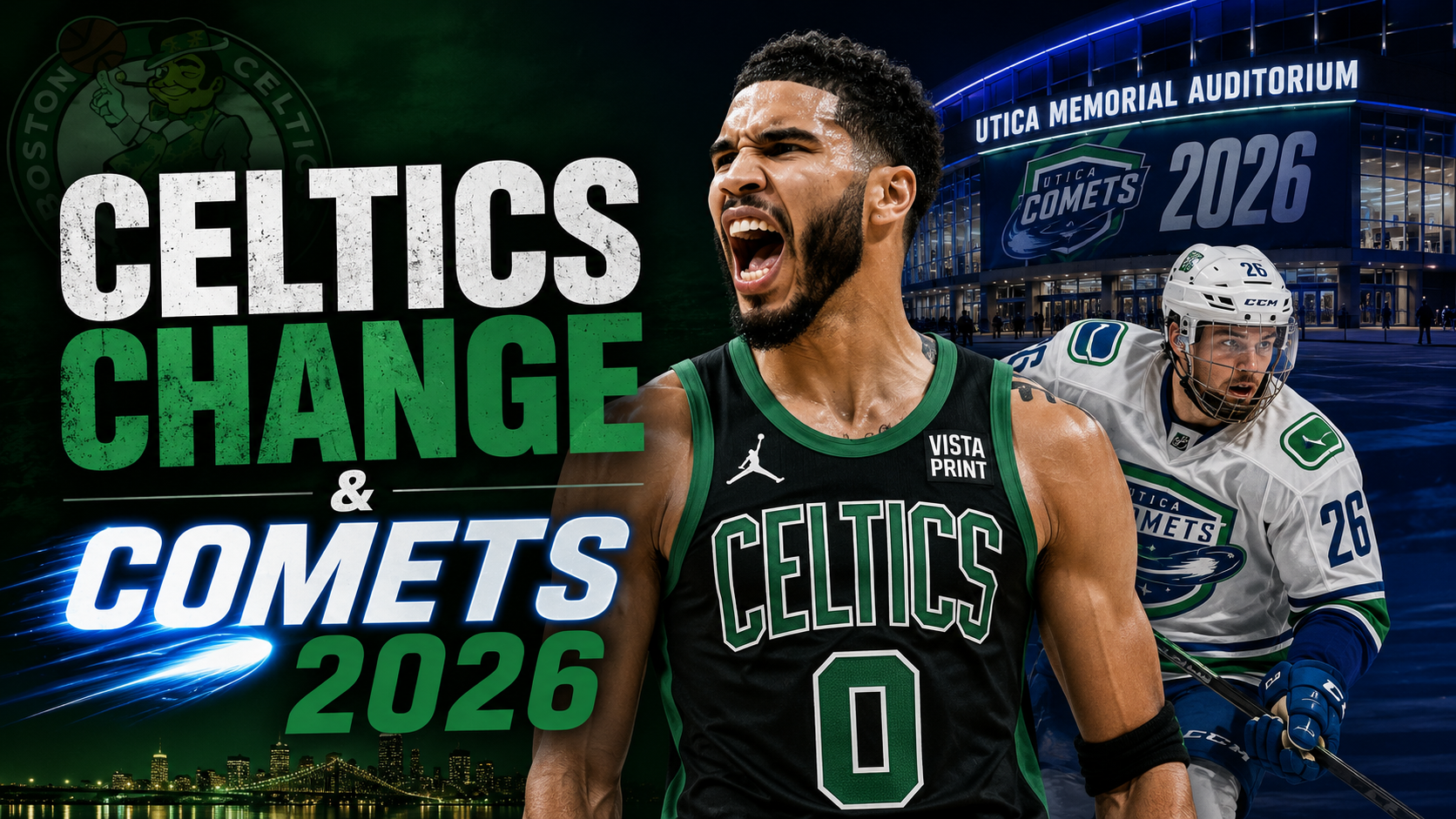
For Boston sports fans, early May 2026 has felt like one long sigh. The Boston Celtics wrapped up their season on May 2 with a 109-100 loss to the Philadelphia 76ers in Game 7 of the Eastern Conference First Round. For anyone who has ever been emotionally invested in this team, the experience was like watching a Shakespearean tragedy unfold in slow motion—except instead of dramatic sword fights, we got turnovers, missed free throws, and the familiar sight of Joel Embiid looking like he read the Celtics’ defensive playbook over breakfast.
Yet, as every sports fan knows, the end of one season simply marks the beginning of a new cycle of hope, speculation, and occasionally irrational expectations. And this offseason in particular is already brimming with drama, nostalgia, and a healthy dash of confusion. The Celtics are facing hard questions about their roster and leadership, while New England’s WNBA fanbase is grappling with the sudden relocation of the Connecticut Sun to Houston, effectively resurrecting the storied Houston Comets franchise. Toss in the ongoing saga of Marcus Smart’s career choices and the return of Isaiah Thomas—this time as a scout rather than a player—and it’s a banner time for basketball analysis, if not for actual winning.
The Celtic Collapse and Emotional Aftermath
Let’s start with the elephant in the TD Garden: the Celtics’ disappointing playoff exit. Losing to the 76ers in a Game 7 is the type of heartbreak that feels uniquely cruel because it offers both the hope of advancement and the crushing reality of failure in the same 48 minutes. Boston’s 109-100 loss wasn’t a blowout, which makes it worse, because fans can perfectly visualize every missed opportunity. Each wasted possession now lives rent-free in the minds of New Englanders, including the one where a wide-open three caromed off the rim like a cruel joke from the basketball gods.
Analytically, the series told a familiar story: the Celtics played excellent team defense in spurts, but faltered when it mattered most. Turnovers and stagnant fourth-quarter offense were recurring themes, as if the team’s playmakers were reenacting performance art about the perils of indecision. The postgame discourse oscillated between blaming the coaching staff, questioning rotations, and wondering if the basketball gods were still punishing the city for celebrating after the 2008 title parade like it was the end of history.
Isaiah Thomas Returns—With a Clipboard
Perhaps the most heartwarming twist in the Celtics’ offseason narrative comes in the form of Isaiah Thomas, the former fan-favorite star who once played through injury and personal tragedy to give Boston some of its most thrilling modern playoff moments. Thomas has returned to the organization, but this time as a professional and college scout based in Seattle. If you were hoping for a comeback on the hardwood, you might be disappointed, but there’s something poetic about him now helping to find the next generation of Celtics talent.
In a league increasingly dependent on advanced scouting and international talent pipelines, Thomas’s new role could be quietly pivotal. His perspective as a former All-Star, undersized guard, and relentless competitor offers an invaluable lens. If anyone can spot the next undersized scorer with the heart of a lion, it’s the man who once turned TD Garden into his personal coliseum despite being 5’9”.
Humorously, one can imagine Thomas watching college games in dusty Seattle gyms, silently judging point guards who refuse to drive into the paint. Somewhere, a freshman missing a floater will feel an inexplicable chill down his spine, unaware that the Ghost of Playoffs Past is taking notes with a slightly disappointed smile.
The Marcus Smart Conundrum
Meanwhile, Marcus Smart, the heart-and-soul defensive stalwart of the Celtics for nearly a decade, spent the 2025-26 season in Los Angeles, wearing Lakers purple and gold—a sight that still makes some Celtics diehards squint in disbelief. Now, as the offseason unfolds, the Lakers are reportedly keen to retain him, with a $5.3 million player option on the table.
The idea of Smart returning to Boston feels unlikely, but it lingers in fan discussions like a ghost of green pastures. Could the Celtics engineer a reunion? Should they even try? analytically, Smart’s impact extends beyond any stat sheet. His defense, grit, and willingness to hurl himself into passing lanes like a human cannonball remain rare commodities. If he stays in LA, Boston fans may have to get used to seeing him antagonize their team from the other side of the court—a reality that is both painful and somehow fitting for the current state of the franchise.
One cannot help but imagine Smart deliberating over his player option while a tiny angel and devil sit on his shoulders—one wearing a vintage Celtics jersey, the other in a sleek Hollywood suit. The angel whispers about legacy and family; the devil whispers about the weather and the lack of state income tax.
Farewell, Connecticut Sun. Hello, Houston Comets.
As if the Celtics’ saga wasn’t enough, New England basketball fans were dealt another emotional blow: the WNBA approved the relocation of the Connecticut Sun to Houston, officially reviving the Houston Comets. The Comets, of course, were one of the league’s original dynasties, winning the first four WNBA championships in the late 1990s. Their return is a significant moment for the league—but a heartbreaking one for the loyal Sun fans who filled Mohegan Sun Arena for years.
The reactions in New England have been predictably dramatic. Social media is flooded with laments, petitions, and creative expressions of grief, including a fan who reportedly held a mock going-away party for her orange jersey collection. The move is, in many ways, a microcosm of the economic and market forces driving professional sports: Houston offers a larger media market, a rich historical connection, and the possibility of higher revenue. Meanwhile, Connecticut—a state that has punched above its weight in developing basketball talent and fandom—finds itself without a WNBA team for the first time in decades.
From a humorous perspective, one can already imagine the awkwardness this will cause at family dinners across New England. Grandma, a lifelong Sun fan, will have to explain to her grandchildren why she is now grudgingly following a team in Houston. Expect plenty of passive-aggressive holiday conversations that start with “Well, if the Comets win, I suppose I’ll be happy for them… but it’s not the same.”
The Domino Effect on New England Basketball Culture
These overlapping storylines—a Celtics playoff disappointment, Isaiah Thomas’s return as a scout, Marcus Smart’s career crossroads, and the Sun’s relocation—paint a picture of a region in flux. New Englanders pride themselves on sporting identity: the idea that their teams reflect the grit, heart, and occasional contrarian stubbornness of the people themselves. When those signposts start shifting, it creates a kind of existential unease.
Boston’s future now hinges on several key factors: front office decision-making, player development, and whether the coaching staff can finally coax playoff consistency from a talented but occasionally mercurial roster. Meanwhile, the emotional connection to women’s professional basketball may face a cooling period unless another franchise can capture that audience. The Sun’s exit leaves a cultural and sporting vacuum that will take time to heal—unless, of course, the Comets’ merchandise sales suddenly spike in Massachusetts, which would be equal parts ironic and telling.
Conclusion: Hope, Humor, and Holding On
Sports seasons end, players move, and franchises relocate, but fandom endures. For New England basketball fans, the spring of 2026 has been a roller coaster of emotional whiplash. There is disappointment in the Celtics’ early exit, nostalgia in Isaiah Thomas’s return, curiosity about Marcus Smart’s choices, and heartbreak over the departure of the Connecticut Sun. Yet through it all, humor remains a lifeline. After all, if we can’t laugh at the absurdity of caring so deeply about a bouncing orange ball, are we really fans at all?
So, Boston, take a deep breath. The offseason is long, the draft is coming, and who knows? Maybe Isaiah Thomas will discover the next great Celtic while scouting in some small Seattle gym, and maybe someday, another WNBA team will call New England home. Until then, we wait, we hope, and we laugh—because that’s what it means to be a basketball fan in 2026.
Leave a Reply
You must be logged in to post a comment.