
Boston Celtics’ Historic Collapse and the Road Ahead
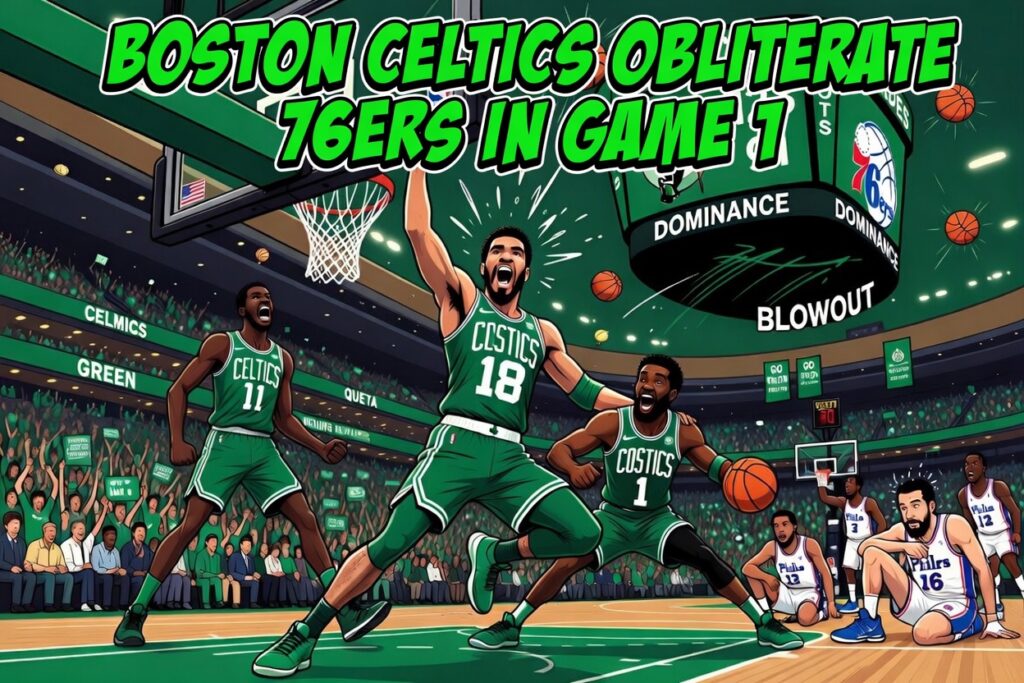
The Boston Celtics, a franchise synonymous with banners, parquet floors, and a certain smug confidence that only 17 championships can justify, have managed to do something they have never done before. No, they did not invent a new defensive strategy or discover a way to prevent Joel Embiid from looking like a mutant hybrid of Hakeem Olajuwon and a bulldozer. They blew a 3-1 series lead. Yes, as of May 2, 2026, the Celtics fell 109-100 in Game 7 to the Philadelphia 76ers, and the chatter around New England is so loud you can almost hear the collective groan bouncing off the Zakim Bridge. This, dear readers, is not just a loss—it’s a chapter in NBA history that Celtics fans would prefer to redact like classified government files.
A Collapse for the Ages
Let’s start with the historical significance of this debacle. The Boston Celtics have played in more playoff series than most teams have had hot meals, and yet until now, they had never lost a series after leading 3-1. Statisticians will file this under “anomalies,” while fans will file it under “emotional trauma.” Losing a 3-1 lead is like forgetting to set the parking brake on Causeway Street: avoidable, embarrassing, and likely to haunt you every time you pass TD Garden.
Jaylen Brown did his best to prevent the collapse by dropping 33 points and grabbing nine rebounds in Game 7, but basketball is not golf—it takes more than one guy to finish a series. Meanwhile, Joel Embiid, a man who treats defenders like minor inconveniences, posted 34 points and 12 rebounds. He played with the energy of someone who read every tweet doubting his durability and decided to take it personally. The 76ers’ comeback wasn’t just about talent; it was about the Celtics looking like they collectively discovered existential dread midway through Game 5.
The Anatomy of a Meltdown
Breaking down the Celtics’ collapse requires an autopsy of coaching decisions, player performance, and perhaps the occult forces haunting the franchise since 2010. Fans will point fingers in every direction, and in Boston, that’s practically a sport of its own. Was it the bench rotation? Was it Jayson Tatum’s streaky shooting? Was it the fact that the team seemed to believe the series ended at Game 4 and started planning their second-round wardrobe selections? All of the above, probably.
What makes this meltdown particularly fascinating is the statistical whiplash. Through four games, the Celtics looked dominant, poised, and focused. Then, like a Netflix series that loses its plot halfway through, they unraveled. Defensive communication broke down, offensive sets turned into interpretive dance, and the collective body language screamed, “We’d rather be anywhere else.” If a psychologist were to diagram the team’s confidence over seven games, it would resemble the drop on a roller coaster built by someone who hates fun.
Roster Questions and the LeBron Rumor Mill
As the echoes of Game 7 fade, the offseason rumor mill is already grinding like a Dunkin’ coffee grinder at 6 a.m. The most tantalizing, and frankly hilarious, rumor is that LeBron James might join the Boston Celtics. Yes, that LeBron. The man whose rivalry with the Celtics has defined over a decade of Eastern Conference basketball might actually end up suiting up in green. For long-time fans, this would be like Darth Vader moving into the Ewok village.
Whether or not this happens depends on a swirling mix of cap space, front-office ambition, and LeBron’s personal desire to add “Celtics legend” to his already absurd resume. Imagine the dynamic: LeBron sharing the court with a still-prime Jaylen Brown and a possibly brooding Jayson Tatum, while the Garden crowd oscillates between hero worship and generational confusion. If nothing else, it would give sports talk radio hosts enough material to survive the next polar vortex.
Jaylen Brown: The Lone Bright Spot
In the shadow of this historic collapse, Jaylen Brown emerged as the unquestioned silver lining. His Game 7 stat line of 33 points and nine rebounds was a masterclass in effort, tenacity, and subtle auditioning for anyone wondering if he could carry a team. Brown played like a man aware of the franchise’s ghosts and determined to exorcise them, only to discover that the ghosts invited Joel Embiid to the party.
Brown’s performance raises a pressing question: is he the future alpha of this team? Tatum remains the face of the franchise, but Brown’s consistent playoff efforts hint at a player ready to make the leap from co-star to leading man. The front office now faces the delicate task of building around—or perhaps alongside—Brown, if they hope to avoid another early exit that feels like a Greek tragedy staged on hardwood.
Farewell to Jason Collins
In the midst of the Celtics’ on-court chaos, the basketball world absorbed a somber and poignant moment: the passing of Jason Collins at the age of 47, after a battle with glioblastoma. Collins, the first openly gay NBA player, was more than a footnote in the league’s history. He was a trailblazer whose courage and authenticity transcended box scores. His death is a reminder that while games and series define sports, the people who play them define their meaning. The Celtics, and the NBA as a whole, will carry his legacy forward even as they grapple with their own immediate disappointments.
What Comes Next?
So where does a team like the Boston Celtics go from here? The path forward is riddled with both promise and peril. The franchise is not in a rebuild, but it may be in an existential interrogation of its own ambition. The roster has talent, but chemistry is fickle. The coaching staff has vision, but perhaps not enough adaptability. And the fanbase has expectations that could make Sisyphus proud.
- Evaluate the Jayson Tatum and Jaylen Brown partnership with brutal honesty.
- Explore veteran additions or even the audacious LeBron pursuit.
- Address bench depth and late-game execution with surgical precision.
Boston is a city that remembers everything. Red Sox curses, Patriots dynasties, Bruins heartbreaks—nothing disappears from the collective consciousness. This Game 7 loss may haunt the team, but it may also define the crucible from which a stronger, smarter version of the Celtics emerges. Or, alternately, it may become a meme that haunts the Jumbotron for years to come. Both outcomes are possible, and, in true Boston fashion, both will probably happen simultaneously.
Conclusion
The 2026 Boston Celtics season will be remembered as the year that history blinked. Their first-ever 3-1 series collapse offers both a cautionary tale and a strange sort of opportunity. Within the heartache lies a challenge: learn, adapt, and refuse to become the villain in the next cautionary tale. Fans may groan, critics may gloat, and talk radio will feast—but the Celtics have been here before, in spirit if not in circumstance. The next chapter is unwritten, and perhaps, just perhaps, it will be worth the wait.