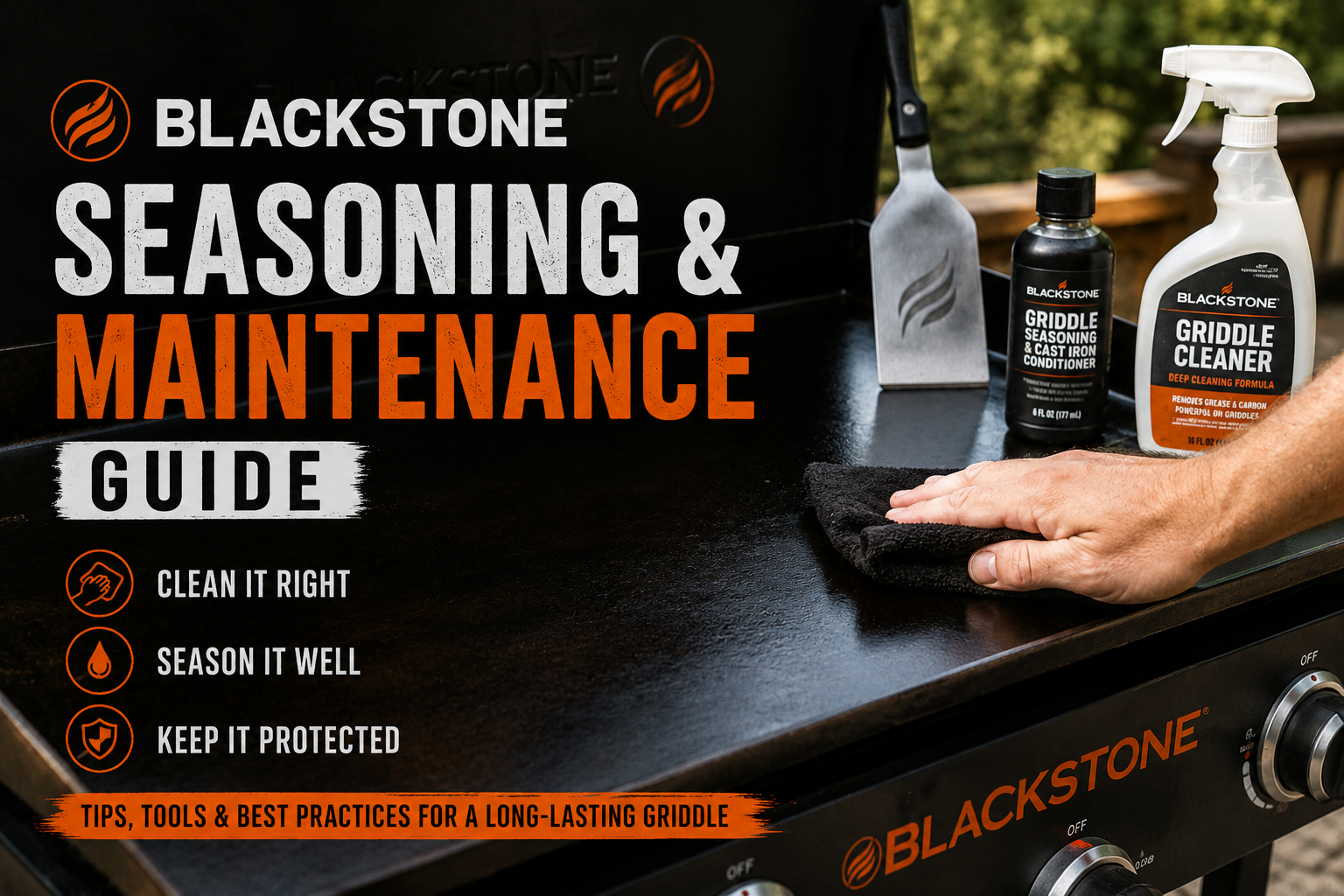
The Blackstone griddle has transformed the landscape of outdoor cooking by offering unmatched versatility, a large flat cooking surface, and the ability to prepare everything from delicate breakfast items to hearty dinner entrées. Unlike traditional grills that feature raised grates and rely on open flames, the Blackstone griddle provides a solid steel surface that allows for even heat distribution and exceptional control. This makes it ideal for cooking pancakes, bacon, smashed burgers, stir-fry vegetables, steaks, and even seafood without the risk of food slipping through grates. However, to achieve the best results and prolong the life of the griddle, proper seasoning, routine maintenance, and the use of compatible accessories are essential. This guide provides a comprehensive, technical overview of how to fully utilize the Blackstone griddle, maintain peak performance, and enhance your overall outdoor cooking experience.
Understanding the Blackstone Griddle
The Blackstone griddle is fundamentally different from a traditional propane or charcoal grill. Its primary feature is the large, flat, cold-rolled steel cooktop that distributes heat evenly across its entire surface. This design not only increases cooking efficiency but also enables users to cook multiple foods simultaneously without cross-contamination of flavors. Griddles are well-suited for high-heat searing, sautéing, and caramelization, while also capable of handling more delicate cooking processes, such as making omelets or lightly toasting bread. By eliminating the direct flame-to-food contact, the griddle reduces flare-ups and enhances control over the Maillard reaction, which is key to achieving rich, savory flavors in proteins.
Blackstone griddles come in various sizes, from portable 17-inch tabletop models to professional 36-inch stations with multiple burners. Each model typically features independently controlled heat zones, a rear or side grease management system, and optional accessories such as protective lids, hard covers, and side shelves. Regardless of the model, the core principles of seasoning and maintenance remain consistent and directly influence both cooking performance and the griddle’s longevity.
The Science and Importance of Seasoning
Seasoning is the process of creating a durable, non-stick surface on the griddle by polymerizing layers of oil onto the steel at high temperatures. Without a proper seasoning layer, food is prone to sticking, the cooktop is susceptible to rust, and overall performance diminishes. The procedure is rooted in chemical and thermal principles: when a high-smoke-point oil, such as flaxseed, canola, or grapeseed oil, is heated beyond its smoke point, it undergoes polymerization and bonds to the metal surface. Repeating this process builds a robust, blackened coating that protects the steel and enhances flavor development in cooked foods.
Step-by-Step Seasoning Procedure
- Clean the cooktop with warm water and a lint-free cloth to remove manufacturing residues and dust.
- Preheat the griddle on medium-high heat until the entire surface is hot and water droplets sizzle upon contact.
- Apply a thin, even coat of high-smoke-point oil using a paper towel or microfiber cloth, ensuring full coverage without pooling.
- Allow the oil to heat until it begins to smoke and darken, a process that usually takes 15–20 minutes for the initial layer.
- Repeat the oiling and smoking process two to three times to establish a durable protective layer.
The initial seasoning process not only protects the steel from oxidation but also forms the foundation for the griddle’s non-stick capabilities. Over time, as the griddle is used and lightly oiled after each session, the seasoning will deepen into a glossy, black finish that enhances cooking performance.
Routine Cleaning and Maintenance
To maintain optimal performance, it is critical to adopt a consistent cleaning and care regimen for your Blackstone griddle. Unlike traditional cookware, soap and abrasive cleaners should be avoided because they strip the protective seasoning layer. Instead, the best practice involves scraping food debris with a metal scraper or spatula immediately after cooking while the surface is still warm. Any stubborn residue can be lifted using a small amount of warm water, which will evaporate quickly on the hot steel.
Once the griddle is cleared of debris, a thin coat of oil should be applied across the surface to prevent moisture-related rusting. For long-term storage, especially in humid environments, adding a slightly thicker oil layer and covering the griddle with a weatherproof lid or soft cover will significantly prolong its life. Periodically, users should inspect the seasoning for uneven spots or exposed steel and re-season as necessary to maintain a uniform protective layer.
Enhancing the Cooking Experience with Accessories
Blackstone offers a range of accessories designed to maximize convenience, efficiency, and cleanliness. The Blackstone Griddle Top Cutting Board is a particularly useful accessory because it allows cooks to safely prepare ingredients adjacent to the cooktop, reducing the time spent transferring food and minimizing mess. Grease Cup Liners are another valuable tool: they simplify post-cook cleanup by capturing excess grease and preventing buildup in the grease trap system.
Additional accessories that enhance usability include wind guards for consistent heat in breezy conditions, non-stick griddle presses for ensuring even burger patties and sandwiches, and stainless steel domes that allow for effective steaming and melting of cheese. By strategically incorporating these accessories, home chefs can create a professional outdoor cooking workflow that rivals indoor kitchen setups.
Cooking Techniques and Recipe Applications
The versatility of the Blackstone griddle is evident in the wide range of dishes it can produce. Breakfast items such as eggs, pancakes, sausages, and hash browns benefit from the even heat distribution and expansive cooktop, allowing multiple components to be cooked simultaneously. Lunch and dinner entrées like smashed hamburgers, fajitas, stir-fry vegetables, and seared fish take advantage of the high-heat zones and controlled surface temperatures.
Advanced techniques involve using temperature gradients across the griddle by setting different burners to distinct heat levels. This allows one side of the griddle to serve as a high-heat searing zone while the other functions as a lower-heat holding or finishing area. By employing these strategies, chefs can manage complex meals efficiently without overcooking sensitive ingredients. Exploring Blackstone’s official recipe library and online community resources can further expand your culinary repertoire, providing inspiration for everything from hibachi-style shrimp to gourmet grilled sandwiches.
Long-Term Care and Storage Considerations
Long-term performance depends on consistent care practices. Storing the griddle in a dry, covered location is ideal, particularly if the unit will be unused for extended periods. Even with an outdoor cover, exposure to humidity and precipitation can lead to surface oxidation if the seasoning layer is neglected. Regular inspections, light oiling, and occasional deep re-seasoning are the best methods to prevent deterioration.
Furthermore, environmental factors such as coastal air or frequent rainfall may necessitate more frequent maintenance. In these conditions, a thicker post-cleaning oil layer and the use of desiccant packs under a hard cover can provide additional protection. Owners who invest time in proper storage and care practices will find that their Blackstone griddle remains operationally efficient and visually appealing for many years.
Conclusion
The Blackstone griddle represents a powerful and adaptable platform for outdoor cooking enthusiasts, capable of delivering restaurant-quality results in a backyard setting. Achieving optimal performance requires a clear understanding of seasoning science, a disciplined approach to maintenance, and the thoughtful use of accessories and cooking strategies. By adopting these best practices and continuously refining techniques, owners can unlock the full potential of their Blackstone griddle and enjoy a diverse range of culinary experiences season after season.
Leave a Reply
You must be logged in to post a comment.