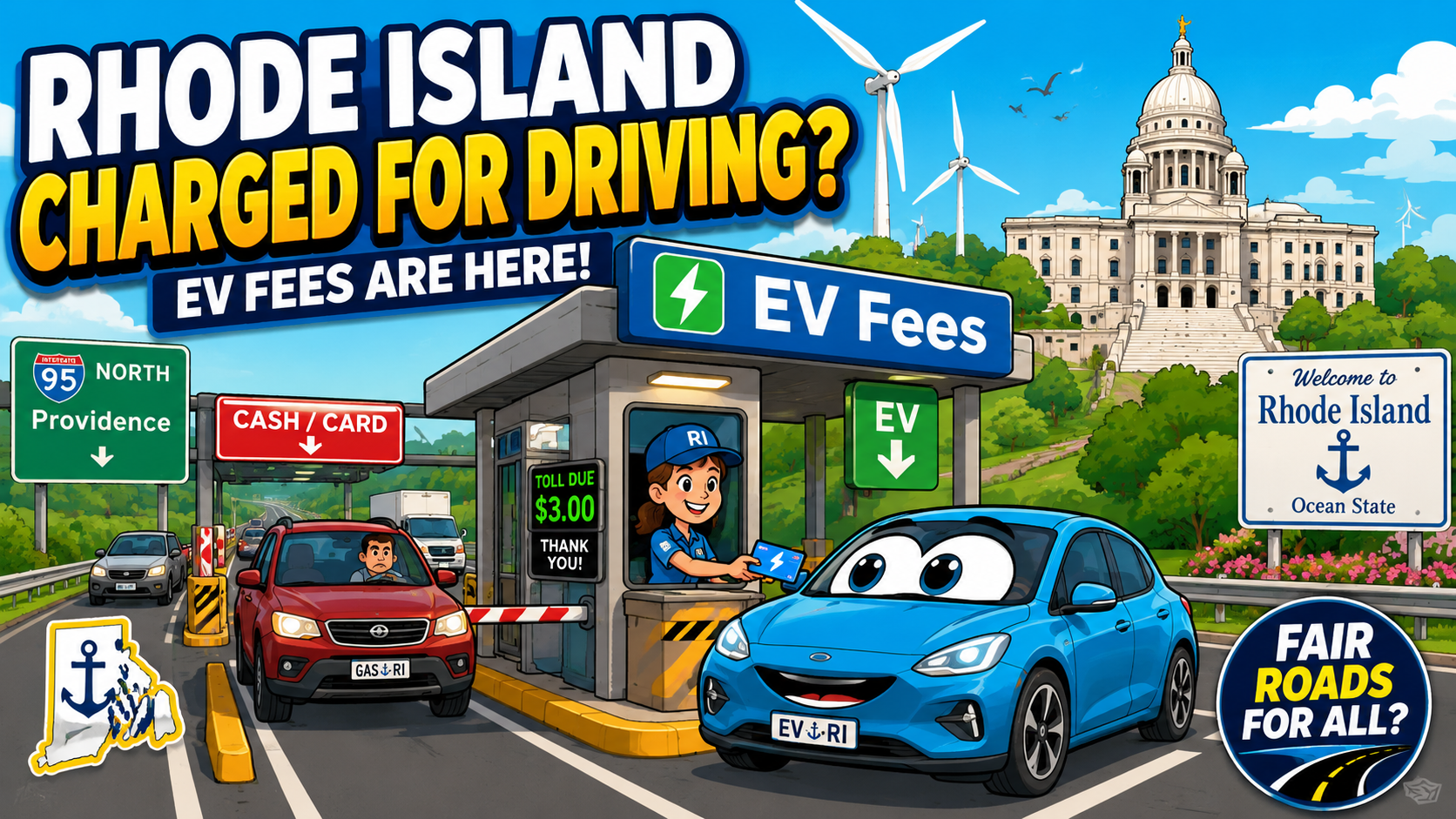
The Lead: Rhode Island’s New EV Registration Fees Spark Debate
In 2026, Rhode Island introduced new biennial registration fees for electric vehicles (EVs) and hybrids: $300 for battery electric vehicles (BEVs) and $150 for plug-in hybrid electric vehicles (PHEVs). This move aims to offset the state’s loss in gas tax revenue due to the increasing adoption of EVs. However, the policy has ignited debates about fairness, environmental impact, and the adequacy of the fees in addressing the state’s transportation funding needs. “`markdown
The Lead: Rhode Island’s New EV Registration Fees Spark Debate
In 2026, Rhode Island rolled out new registration fees for electric and hybrid vehicles to offset declining gas tax revenue. Battery electric vehicles (BEVs) now incur $300 every two years, while plug-in hybrid electric vehicles (PHEVs) pay $150 biennially. Non-plug-in hybrids face a $50 annual fee. According to the Senate Fiscal Office, these amounts roughly align with what the average gas-powered car contributes through motor fuel taxes over two years .
While the state argues the policy ensures all drivers contribute to road maintenance, critics highlight a gap: EV owners already pay electricity taxes and energy efficiency surcharges, raising questions about double taxation and whether this approach could slow the state’s clean energy transition.
Historical Context: Gas Tax Legacy in the Ocean State
Rhode Island has long relied on its motor fuel tax as a cornerstone of transportation funding. Historically:
- Gas tax revenue: Averaged ~$150 million annually in recent years, but projections show a steady decline through 2030 due to improved vehicle efficiency and EV adoption .
- Funding structure: The gas tax funds the Highway Maintenance Account (HMA), with 5% redirected to the state’s general fund.
- Previous policies: Until 2026, Rhode Island was one of 11 states without special EV registration fees, unlike neighboring New Hampshire and Vermont, which adopted early EV surcharges.
The shift reflects a tension between two historic state priorities: maintaining its infrastructure and embracing its climate commitments under the Regional Greenhouse Gas Initiative (RGGI) .
Stakeholder Analysis: Voices from the State and the Streets
State Officials:
- Rhode Island DMV & Senate Fiscal Office: Advocate the fees as a “fair share” approach to compensate for lost gas tax revenue. Officials estimate that a typical gas vehicle pays ~$150/yr in gas taxes, matching the new EV fee structure.
- Office of Energy Resources (OER): Quietly acknowledges that while EV fees generate revenue, they may conflict with incentive programs funded through RGGI to promote electrification .
Local Residents and EV Owners:
- Proponents: Some residents agree that EV owners should contribute to road upkeep. They argue that, without reform, gas drivers would shoulder an unfair burden as the vehicle fleet electrifies.
- Critics: EV owners feel penalized during the state’s transition to clean transportation. Many highlight that they already pay:
- ~$0.00582 per kWh energy efficiency charge on electricity .
- Higher upfront costs for vehicles that benefit public health and reduce emissions.
One Providence EV owner shared, “I switched to electric to cut emissions and costs, but now I’m paying more in fees than I saved in gas taxes.”
Future Outlook: Rhode Island in 2036
Over the next decade, Rhode Island’s infrastructure and climate strategies will intersect in new ways:
- Revenue Projections:
- Motor fuel tax revenue is projected to fall to $130M by 2030, down from $170M in 2024 .
- EV fees could generate a modest bridge, but will not fully replace gas taxes as adoption accelerates.
- Policy Evolution:
- Pressure is mounting for mileage-based road usage fees (RUFs) or kilowatt-hour road taxes to create a more equitable system.
- Legislators may explore tying electric vehicle fees directly to electricity consumption for charging, ensuring proportional payment without discouraging adoption.
- Climate Goals:
- Rhode Island remains committed to net-zero emissions by 2050. Policymakers will need to balance revenue generation with incentives that keep EV adoption on track.
- Overly punitive fees could slow the electrification of the state’s fleet, especially in lower-income communities.
By 2036, Rhode Island may need a redesign of transport funding—integrating dynamic, usage-based systems that reflect modern mobility patterns while keeping faith with the state’s climate commitments.
Leave a Reply
You must be logged in to post a comment.