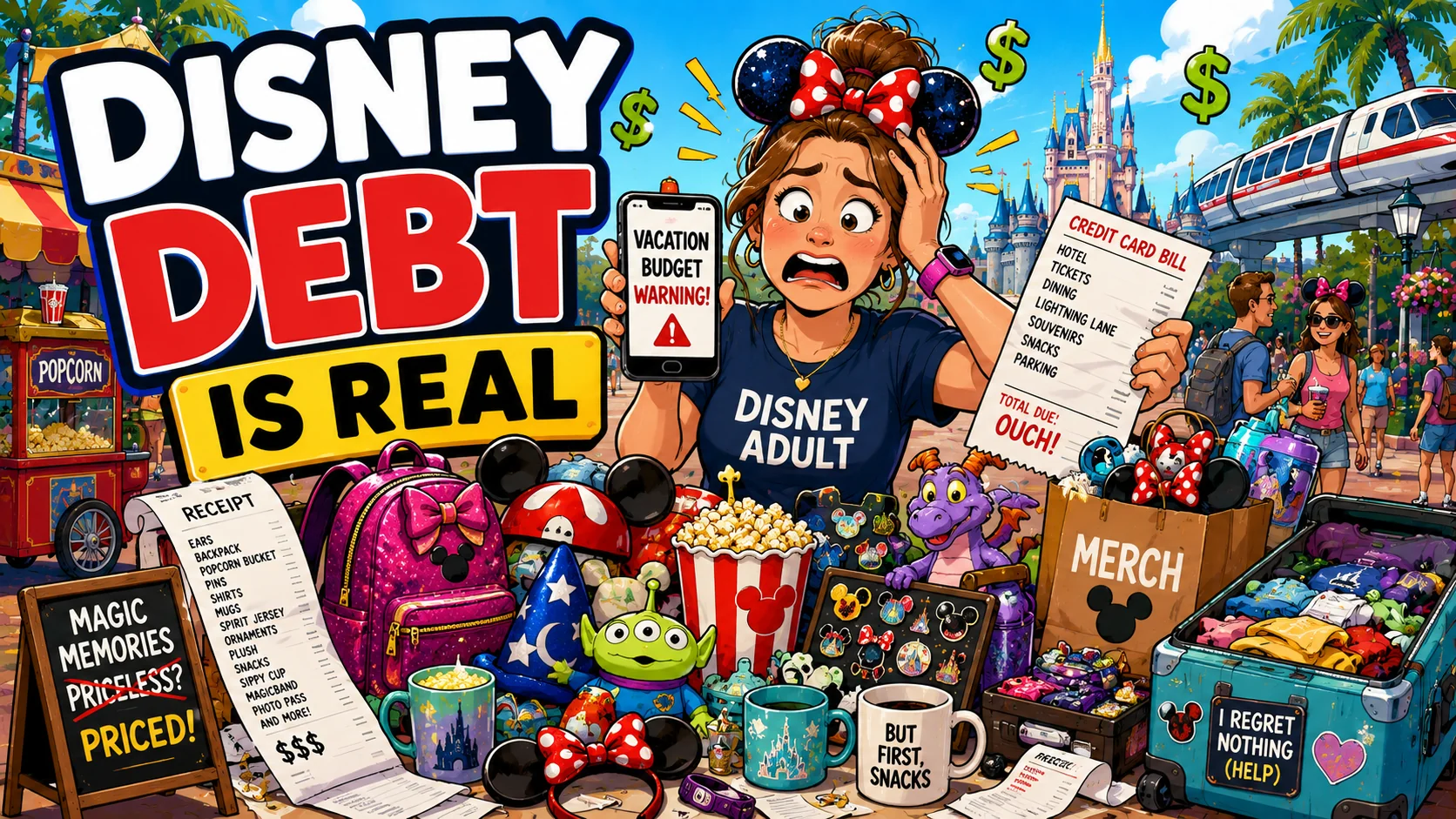
Some Disney fans use the phrase “Disney debt” to describe the money they owe after spending more than they planned on Disney vacations, merchandise, collectibles, cruises, special events, and other Disney-related experiences.
At first, the phrase sounds almost funny. It feels like the kind of joke someone makes after buying too many spirit jerseys, Loungefly backpacks, collectible popcorn buckets, limited-edition pins, or one more souvenir they absolutely did not need.
But behind the joke is a real financial warning.
For some Disney fans, including some self-described Disney Adults, the cost of loving Disney can move beyond entertainment and into dangerous financial territory. What starts as a vacation, hobby, collection, or way to stay connected to childhood memories can quietly become credit card balances, buy-now-pay-later payments, personal loans, and months of financial stress.
To be clear, this is not an attack on Disney fans. Loving Disney is not the problem. Visiting the parks is not the problem. Collecting merchandise is not automatically irresponsible. The problem begins when the emotional pull of Disney collides with rising prices, social media pressure, easy credit, and fear of missing out.
That is where Disney debt begins.
What Is Disney Debt?
Disney debt is not an official financial term. It is a practical phrase for money people owe because they spent more than they could comfortably afford on Disney-related experiences or products.
That debt can come from a Walt Disney World vacation, Disneyland trip, Disney Cruise Line sailing, annual pass, hotel stay, park tickets, dining, merchandise, collectibles, special events, or ongoing Disney shopping from home.
For one person, Disney debt may mean putting a family vacation on a credit card and paying it off over several months. For another, it may mean carrying balances from multiple Disney trips while already planning the next one. In more serious cases, it can mean buying merchandise, collectibles, limited releases, and park experiences while regular bills or emergency savings are already under pressure.
This matters because consumer debt is already a major issue in the United States. The Federal Reserve reported that consumer credit increased at a seasonally adjusted annual rate of 3.2 percent during the first quarter of 2026, while revolving credit increased at an annual rate of 3.8 percent. In March 2026 alone, consumer credit increased at an annual rate of 5.8 percent.
That does not mean Disney is the cause of America’s credit card debt problem. It means expensive vacations and emotionally driven spending are happening in a financial environment where many people are already relying heavily on credit.
Why Disney Adults Can Be Vulnerable to Overspending
The phrase Disney Adult is often used online to describe adults who love Disney parks, films, characters, merchandise, history, food, resorts, cruises, or the Disney lifestyle in general. Some use the term proudly. Others use it mockingly. Either way, it describes a real audience: adults who spend time, money, and emotional energy on Disney-related experiences.
Disney Adults are not all the same. Some are casual fans. Some are collectors. Some are solo travelers. Some are couples without children. Some are parents who still enjoy Disney as much as their kids do. Some are adults over 50 who grew up with Disney and now have the freedom to travel on their own terms.
The financial risk comes from the fact that Disney is not just a destination. It is an emotional brand.
Disney’s brand is strongly tied to nostalgia, comfort, identity, celebration, escape, and belonging. That makes spending feel different. A shirt is not just a shirt. It is a memory. A character meal is not just dinner. It is part of the trip. A collectible popcorn bucket is not just plastic. It is proof that you were there.
That emotional attachment can make it easy to justify spending that would seem excessive in another setting.
The Rising Cost of a Disney Vacation
A Disney vacation has never been cheap, but the financial pressure has become more noticeable. A trip to Walt Disney World can include park tickets, hotel rooms, transportation, food, special-event tickets, Lightning Lane passes, merchandise, tips, parking, stroller or scooter rentals, and travel costs.
Disney also uses date-based pricing, meaning the cost of a ticket can vary depending on the park and date. Reuters reported that Disney announced higher admission prices at its U.S. theme parks during peak holiday periods beginning in 2026, with one-day Walt Disney World tickets during those periods exceeding the previous top price of $199.
For Disney Adults, the cost often goes beyond the basics. Many are not simply looking for the cheapest way into the park. They may want better resorts, table-service dining, after-hours events, dessert parties, exclusive merchandise, upgraded park access, hard-ticket holiday parties, Disney Springs shopping, or a cruise added onto the trip.
None of those things are wrong by themselves. The issue is that the “dream trip” can quickly become a trip financed by debt.
The FOMO Problem: “I Have to Go Now”
One of the biggest drivers of Disney debt is FOMO, or fear of missing out.
Disney is very good at creating urgency. Limited-time festivals, seasonal snacks, anniversary merchandise, holiday parties, attraction openings, popcorn buckets, spirit jerseys, character experiences, and event-exclusive items can all create the feeling that guests must act now or lose the chance forever.
Social media can make this worse.
A Disney fan scrolling Instagram, TikTok, YouTube, or Facebook may see other adults constantly posting new trips, new merchandise hauls, new dining reviews, and new park outfits. That can make a normal person feel behind. Suddenly, skipping a year feels like missing out on the entire Disney conversation.
That pressure can lead to dangerous thinking:
“I’ll just put it on the card.”
“I deserve this.”
“I’ll pay it off later.”
“It’s a once-in-a-lifetime trip.”
“They might not sell this again.”
“Everyone else is going.”
“I work hard, so I should be able to do this.”
Some of those statements may be true. But if the money is not actually there, the bill will still come due.
Merchandise: The Quiet Debt Machine
Park tickets and hotel rooms are the obvious expenses. Merchandise is the sneakier one.
Disney merchandise can become a spending trap because it is emotional, collectible, and often tied to scarcity. Loungefly backpacks, Minnie ears, pins, mugs, ornaments, apparel, plush toys, limited-edition items, MagicBand designs, home décor, holiday decorations, and collaborations can all feel like small purchases in the moment.
The problem is that small purchases stack quickly.
A pair of ears, a shirt, a Loungefly backpack, an ornament, a snack container, and a hoodie can easily turn into hundreds of dollars before a guest has even counted meals, transportation, or hotel costs. For collectors, the spending can continue long after the vacation ends.
Online shopping also keeps the Disney spending cycle alive. You no longer need to be inside the parks to buy Disney items. That convenience is great for fans, but dangerous for anyone already carrying balances.
The merchandise mindset can become:
“I’m not going to the parks this month, so this purchase is my Disney fix.”
That “fix” can become another form of debt.
Buy Now, Pay Later Makes It Easier to Overspend
Another modern problem is the rise of buy-now-pay-later services and installment payments. These services can make purchases feel smaller than they really are.
Instead of asking, “Can I afford this full purchase?” the buyer asks, “Can I afford this installment?”
That shift matters.
For Disney fans buying merchandise, travel accessories, clothing, collectibles, or vacation-related purchases, installment payments can create the illusion of affordability. One payment plan may not be a problem. But several payment plans at once can become a financial mess.
The danger is that each individual purchase feels manageable, while the total monthly obligation becomes overwhelming.
Credit Cards Turn Magic Into Interest
Credit cards are not automatically bad. Used responsibly, they can provide rewards, fraud protection, and travel benefits. But credit cards become dangerous when they are used to finance a lifestyle the cardholder cannot afford.
Travel is especially vulnerable to this. NerdWallet’s 2026 summer travel report found that 84 percent of summer travelers planned to use credit cards to pay for at least some vacation expenses, making credit cards the most popular payment method for those costs.
Using a credit card is not the same as being in debt. Many people pay their cards off in full. The trouble starts when the balance carries over.
LendingTree reported that the average APR for credit cards accruing interest was 21.52 percent in the first quarter of 2026. At that rate, a Disney trip that is not paid off quickly becomes far more expensive than the original vacation cost.
A $5,000 trip does not stay a $5,000 trip if it sits on a high-interest credit card. It becomes a financial anchor.
The “I Deserve It” Trap
One reason Disney debt is so emotionally complicated is that many people use Disney as a reward.
A Disney trip can feel like a reward for working hard, surviving stress, raising kids, dealing with illness, going through a breakup, hitting a milestone birthday, retiring, or simply needing joy. That emotional value is real.
But “I deserve it” can become dangerous when it overrides financial reality.
You may deserve rest. You may deserve joy. You may deserve a vacation. But you also deserve peace when the credit card bill arrives. You deserve a savings account. You deserve not to be trapped by monthly minimum payments. You deserve a vacation that does not follow you home as debt.
Disney should be a source of happiness, not a financial hangover.
How Disney Debt Affects Adults Over 50
Disney debt can affect people at any age, but it can be especially concerning for adults over 50.
Many older Disney fans are in a different financial stage. Some are nearing retirement. Some are already retired. Some are helping adult children. Some are caring for aging parents. Some are dealing with healthcare costs. Some are trying to rebuild savings after years of family expenses.
At the same time, many adults over 50 still prioritize travel. AARP’s 2026 Travel Trends survey found that 64 percent of adults age 50 and older expected to travel in 2026, even as cost concerns remained part of the planning process.
That creates a tension: people want meaningful travel, but they also need to protect long-term financial stability.
For adults over 50, Disney debt can be especially risky because there may be less time to recover from large financial mistakes before retirement. A trip that seems manageable in the moment can interfere with emergency savings, retirement contributions, medical expenses, or fixed-income planning.
That does not mean adults over 50 should avoid Disney. It means the trip should be planned with clear financial boundaries.
Disney Debt and the Social Media Performance Problem
For some fans, Disney vacations have become highly performative on social media. Many fans are not just taking trips; they are documenting them.
There are outfits to coordinate, snacks to photograph, hotel rooms to tour, merchandise hauls to post, and restaurant reservations to review. For creators, bloggers, vloggers, and influencers, the pressure can be even stronger. If Disney content is part of your identity or business, skipping a trip can feel like falling behind.
But content pressure can create bad spending habits.
A person might justify extra expenses because they are “for the blog,” “for the channel,” “for the review,” or “for the audience.” That can be reasonable if the spending is part of a real business plan. But if the content does not generate enough income to cover the expense, it is still personal debt wearing a business costume.
Disney content creators should be especially careful. A trip should not be considered “worth it” just because it produced photos, videos, or posts. It is only financially worth it if the cost fits the budget or produces a realistic return.
Warning Signs You May Be Falling Into Disney Debt
Disney debt does not usually appear all at once. It builds gradually. Here are some warning signs:
You are still paying off the last Disney trip while planning the next one.
You hide or downplay Disney purchases from your spouse, partner, or family.
You use credit cards for tickets, hotels, food, and merchandise without a payoff plan.
You buy limited-edition items because you are afraid they will disappear.
You feel anxious when you see other Disney fans posting trips or merchandise.
You tell yourself every trip is “once in a lifetime,” even though you go often.
You have no emergency fund but continue buying Disney-related items.
You are making only minimum payments on credit cards.
You use buy-now-pay-later services for nonessential Disney purchases.
You feel regret after Disney shopping but keep doing it anyway.
If several of these sound familiar, it may be time to pause and reassess.
How Much Disney Can You Actually Afford?
The uncomfortable truth is that many people do not know what their Disney trip really costs until after it is over.
They budget for hotel and tickets but forget food. They budget for food but forget tips. They budget for merchandise but forget airport transportation, parking, pet boarding, travel insurance, fuel, tolls, or replacement items bought during the trip.
A realistic Disney budget should include:
Park tickets
Hotel or rental lodging
Flights, gas, tolls, rideshare, or rental car
Food and snacks
Lightning Lane or premium access purchases
Special-event tickets
Merchandise
Tips
Parking
Travel insurance
Pet care at home
Emergency cushion
Souvenirs for others
Extra medications, sunscreen, ponchos, chargers, and comfort items
If that total cannot be paid without carrying debt, the trip needs to change.
That does not mean canceling the dream. It may mean shortening the trip, staying off-site, skipping park hopper tickets, reducing table-service meals, avoiding special events, limiting merchandise, or going during a less expensive season.
How to Enjoy Disney Without Going Into Debt
Avoiding Disney debt does not mean becoming cheap or joyless. It means choosing what matters most.
Start with a real number. Decide how much you can spend without carrying a balance. That number is your trip budget, not a suggestion.
Build the trip backward from the budget. Instead of planning the dream trip first and figuring out the money later, start with the money and design the best trip within that limit.
Use a Disney sinking fund. Set aside money every month in a separate savings account. When the trip is funded, you go. If the trip is not funded, you wait.
Limit park days. A five-night trip does not need five park days. Resort days, Disney Springs, pool time, transportation rides, and hotel exploring can make the trip more relaxing and less expensive.
Set a merchandise budget before you arrive. Give yourself a fixed amount for souvenirs. Once it is gone, shopping is done.
Avoid emotional purchases on day one. The first day of a Disney trip can make everything feel exciting. Wait before buying expensive merchandise. If you still want it later, then consider it.
Skip the “everyone else is doing it” spending. You do not need every dessert party, every limited item, every lounge, every character meal, or every add-on.
Pay off the trip before the trip. The best Disney vacation is the one that does not follow you home as a credit card balance.
A Better Way to Think About Disney Spending
The healthiest Disney fans are not the ones who spend the most. They are the ones who know what they value.
Some fans care most about food. Others care about resorts. Some care about rides. Some care about merchandise. Some care about photography. Some care about relaxing by the pool. Some care about bringing grandchildren. Some care about collecting memories, not things.
The key is to stop trying to buy every version of Disney at once.
You do not need the deluxe resort, the longest ticket, the most expensive restaurant, the newest spirit jersey, the special event, the collectible bucket, and the upgraded room every time. Pick what matters most for this trip and let the rest go.
Disney will still be there.
That may be the most important sentence in the entire article: Disney will still be there.
The merchandise may change. The snack may disappear. The ride may get refurbished. The festival booth may close. But the larger Disney experience is not going away. You do not need to financially hurt yourself to prove that you love it.
Final Thoughts: The Magic Should Not Become a Monthly Payment
Disney debt is real because Disney spending can feel emotional, urgent, and justified. For some Disney Adults, the parks and merchandise are tied to identity, nostalgia, joy, and escape. That can make it easy to overspend and hard to admit when the spending has gone too far.
But loving Disney should not mean sacrificing financial peace.
A Disney trip paid for in full will feel better than a Disney trip that becomes six months of credit card stress. A smaller vacation without debt is better than a deluxe trip that creates anxiety. A carefully chosen souvenir is better than a pile of merchandise that becomes a monthly payment.
Disney magic is supposed to make life feel lighter. If it is making your financial life heavier, it may be time to step back, reset, and build a healthier way to enjoy the thing you love.
You can be a Disney Adult without being a Disney debtor.
And honestly, that may be the most magical upgrade of all.
Leave a Reply
You must be logged in to post a comment.