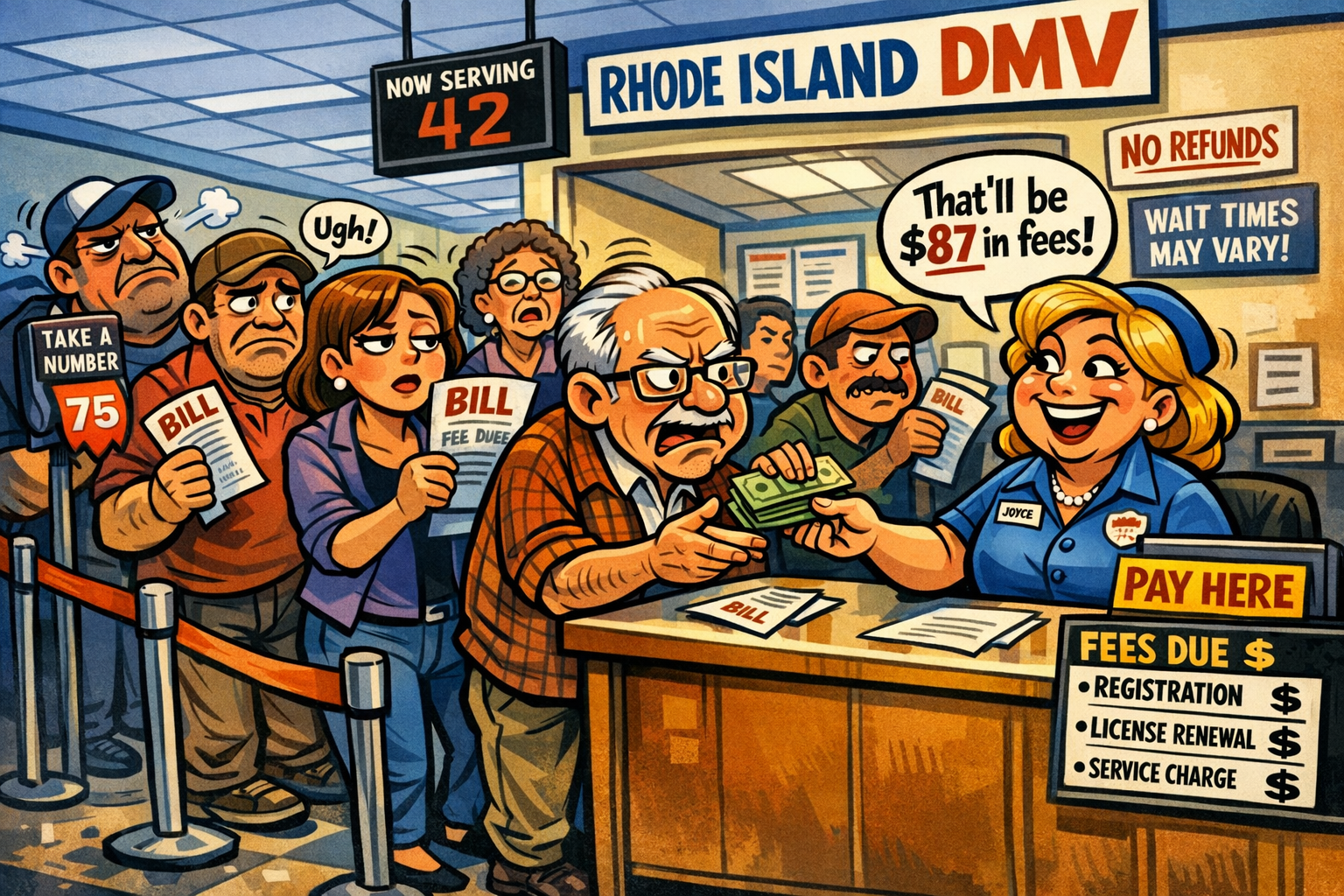
The RIDMV’s Fees: A Sarcastic Ode to Bureaucratic Generosity
In the Ocean State, the Rhode Island Division of Motor Vehicles (RIDMV) has perfected the art of extracting fees from residents, turning routine transactions into expensive affairs. From vehicle registrations to driver’s licenses, the RIDMV’s fee schedule is a testament to the state’s commitment to revenue generation. For instance, a standard passenger vehicle registration renewal now includes a $40 DOT surcharge, a $3.50 technology fee, and, for electric vehicles, an additional $200 annual fee. Similarly, a five-year driver’s license renewal carries a $40 surcharge, a $3.50 technology fee, and a $1.55 minimum service fee for credit card payments. These fees, while seemingly minor, add up, placing a financial burden on residents and raising questions about the state’s priorities in revenue collection and public service delivery. The RIDMV’s fee structure reflects a broader trend in Rhode Island’s history of leveraging fees for revenue, often at the expense of its residents’ wallets. As the state continues to face budgetary challenges, the question remains: when will the RIDMV’s generosity end?

Historical Context: A Legacy of Fees in Rhode Island’s Bureaucracy
Rhode Island’s history is rich with instances where fees have been used as a primary revenue source. From the early 20th century, when vehicle registration fees were first introduced, to the 2011 Transportation Investment and Debt Reduction Act, which imposed additional surcharges on licenses and registrations, the state has consistently turned to its residents for financial support. This historical reliance on fees has shaped the state’s economic landscape, often leading to public discontent and calls for reform. The current RIDMV fee structure is a continuation of this legacy, reflecting a bureaucratic culture that prioritizes revenue generation over public service efficiency and affordability. Understanding this historical context is crucial in evaluating the current fee structure and its impact on Rhode Island’s residents and economy.
Stakeholder Analysis: Perspectives from Providence Officials and Affected Residents
Providence officials argue that the fees are necessary to fund transportation infrastructure and maintain the state’s roadways. However, residents express frustration, citing the cumulative financial burden and the lack of transparency in how the funds are allocated. The disparity between the state’s revenue needs and residents’ financial well-being highlights the need for a more balanced approach to fee implementation and public service funding. Engaging in open dialogue between officials and residents is essential to ensure that the state’s revenue strategies align with the needs and capabilities of its citizens, fostering a more equitable and transparent system.

Future Outlook: The Long-Term Impact on Rhode Island’s Landscape
Looking ahead, the current fee structure may have significant implications for Rhode Island’s economic and social landscape. The cumulative financial burden on residents could lead to increased public dissatisfaction and potential economic disparities, as lower-income individuals may struggle to afford necessary services. Additionally, the lack of transparency in fee allocation could erode public trust in state institutions, hindering future policy initiatives. To mitigate these risks, it is imperative for the state to reassess its fee structure, ensuring that it balances revenue generation with the financial well-being of its residents and maintains transparency in fund allocation. By adopting a more equitable and transparent approach, Rhode Island can foster a more sustainable and harmonious relationship between the state and its citizens, paving the way for a brighter future for all.
Leave a Reply
You must be logged in to post a comment.