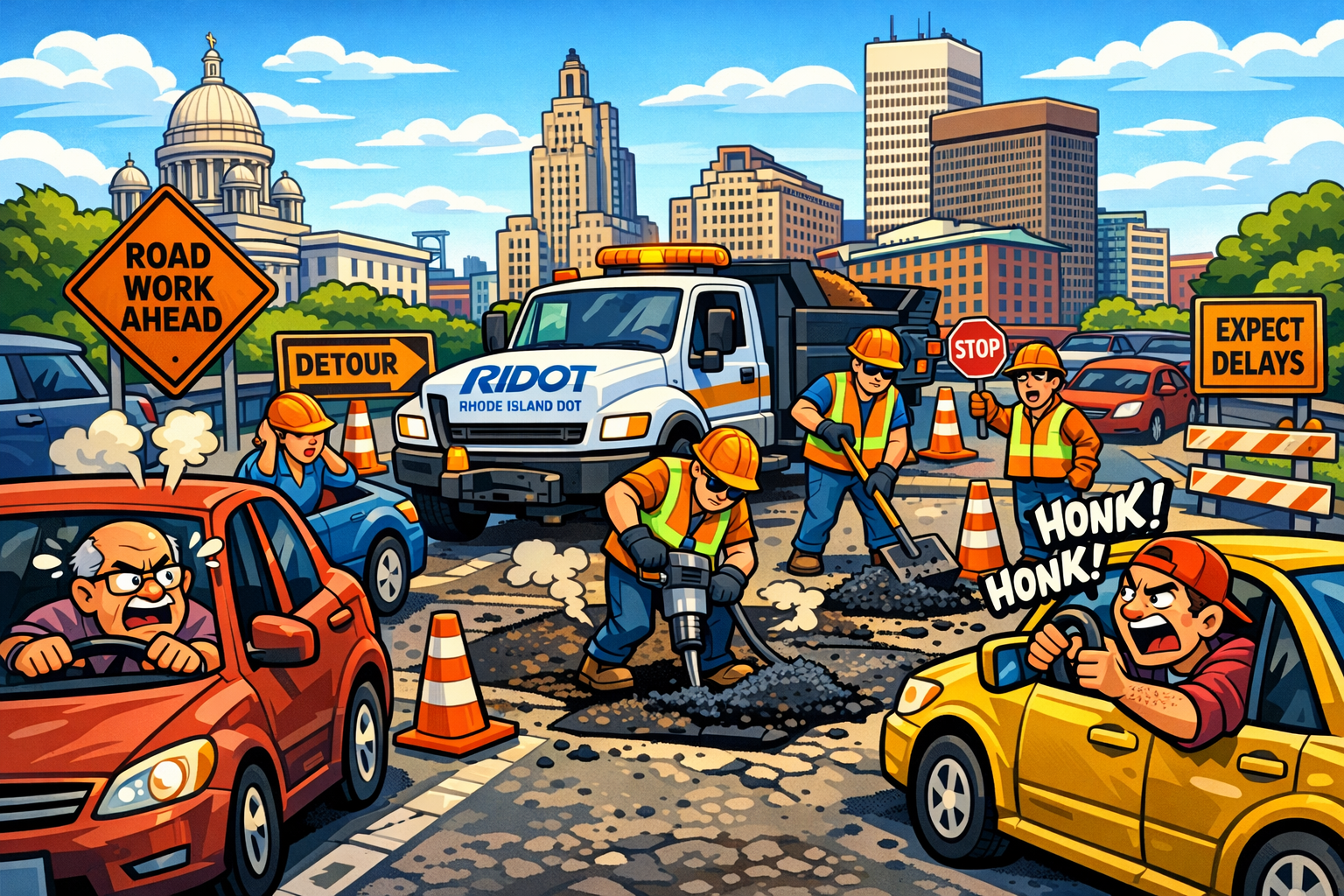
The Lead: Rhode Island’s Road Woes Amid Rising Temperatures
As Rhode Island transitions from winter to spring, residents are confronting a surge in potholes and deteriorating road conditions. The freeze-thaw cycle, exacerbated by the recent historic blizzard that dumped over 37 inches of snow in Providence, has left roads riddled with hazards. The Rhode Island Department of Transportation (RIDOT) reports that approximately 40% of state roads are rated fair or worse, highlighting the urgent need for infrastructure investment. Local residents express frustration over vehicle damage and safety concerns, while officials are implementing temporary measures to address the immediate crisis. Looking ahead, the state’s aging infrastructure and climate change pose significant challenges, necessitating comprehensive planning and investment to ensure safe and reliable transportation for all Rhode Islanders. “`markdown
The Lead: Rhode Island’s Road Woes Amid Rising Temperatures
Rhode Island enters the spring of 2026 facing a familiar but intensifying problem: potholes and crumbling roads that have left drivers frustrated and municipalities scrambling. Following the historic Blizzard of 2026—which buried Providence under 37.9 inches of snow, surpassing even the infamous Blizzard of 1978—rapid temperature swings have triggered a surge in road damage across the state. These freeze-thaw cycles allow water to seep into cracks, freeze, and expand, ultimately fracturing the asphalt under the weight of traffic.

According to the Rhode Island Department of Transportation (RIDOT), 40% of state roads are rated fair or worse, leaving them especially vulnerable when extreme weather strikes . Auto shops report a spike in tire, wheel, and suspension damage, while drivers face repair bills often exceeding $1,000 per vehicle . State and local agencies are battling the seasonal surge with 24/7 patching operations, but the problem raises larger concerns about infrastructure investment, climate change adaptation, and the economic impact on the Ocean State.
Historical Context
Rhode Island’s geography and weather patterns have long conspired to challenge its transportation network. The state’s coastal location exposes it to nor’easters, storm surges, and heavy snowfalls, while its compact urban corridors and aging roadways magnify the impact of seasonal damage.
Key historical factors:
- Legacy of the Blizzard of 1978: Pothole seasons following major storms are ingrained in Rhode Island’s collective memory. The Blizzard of 2026 is now officially the state’s snowiest two-day event, surpassing 1978’s 28.6-inch mark .
- Infrastructure Age: Many state and municipal roadways rely on pavement laid decades ago, predating modern climate-resilient engineering.
- Climate Change: Rhode Island’s “Resilient Rhody” initiative (2018) and subsequent climate resilience policies underscore the growing threat of extreme precipitation and variable temperatures .
Historically, the state has oscillated between reactive repairs and periodic investment booms, such as the RhodeWorks program. But the frequency of extreme weather events—blizzards in February, sudden thaws in March, and heat waves in summer—suggests that traditional maintenance cycles may no longer suffice.
Stakeholder Analysis
1. State and Local Government
- RIDOT: Spearheads around-the-clock patching, with crews using specialized heated equipment to apply more durable “hot patches.” Officials urge drivers to report hazards immediately through online portals .
- Providence Department of Public Works: Focused on urban streets where high traffic accelerates pavement failure and where complaints flood 311 systems daily .
- Governor Dan McKee: Emphasizes short-term responsiveness while promoting long-term infrastructure adaptation within the framework of climate resilience planning.
2. Residents and Drivers
- Motorists in Cranston, Woonsocket, and Providence voice widespread exasperation: “No matter where you go, you always find potholes in Rhode Island,” said resident Ricardo Vasquez .
- Auto repair shops report a surge in claims, with local businesses noting that suspension, wheel alignment, and tire replacements spike in the weeks following major thaws.

3. Business and Economic Interests
- Delivery services, public transit, and rideshare operators face higher vehicle maintenance costs.
- Tourism and commerce are impacted as detours, delays, and unsafe conditions discourage travel and increase operational expenses.
4. Policy and Planning Experts
- Advocates for climate-resilient infrastructure warn that repeated cycles of reactive maintenance are unsustainable.
- Municipal leaders are exploring expanded use of permeable pavements, improved stormwater drainage, and earlier application of road sealants to prolong pavement life.
Data Snapshot: Rhode Island’s Road Conditions
- State Roads Rated Fair or Worse: 40%
- Estimated Annual Pothole Damage Nationwide: $3 billion (AAA)
- RIDOT Response Time for Pothole Claims: Within 7 days of report filing
- Historic Snowfall Event: 37.9 inches at T.F. Green Airport in Feb 2026
- Cities Most Impacted: Providence, Cranston, and Woonsocket
Future Outlook
Over the next decade, Rhode Island faces a pivotal choice: maintain the reactive cycle of seasonal patching or invest in climate-resilient infrastructure capable of withstanding increasingly volatile weather patterns.

Projected Impacts by 2036:
- Increased Frequency of Extreme Events: Climate projections indicate more intense winters and hotter, wetter summers, accelerating road wear.
- Rising Maintenance Costs: Without structural investment, seasonal pothole repair could escalate to tens of millions annually.
- Economic Ripple Effects: Poor road conditions deter business investment, affect logistics, and lower resident satisfaction.
Strategies in Motion:
- Resilient Rhody 2.0: A statewide initiative aligning infrastructure upgrades with climate adaptation goals .
- Enhanced Pavement Preservation: Early sealing, better drainage design, and engineered materials to extend road life.
- Federal Funding Leverage: Aggressive pursuit of grants under the Bipartisan Infrastructure Law and climate resilience programs.
Ultimately, Rhode Island’s path forward will require both engineering innovation and political will. The pothole crisis of 2026 serves as a reminder that the state’s infrastructure is at a crossroads—one where climate realities are no longer abstract projections but daily hazards on the streets of Providence.
Leave a Reply
You must be logged in to post a comment.