Heads up: some links on this page are affiliate links. As an Amazon Associate I earn from qualifying purchases, at no extra cost to you.
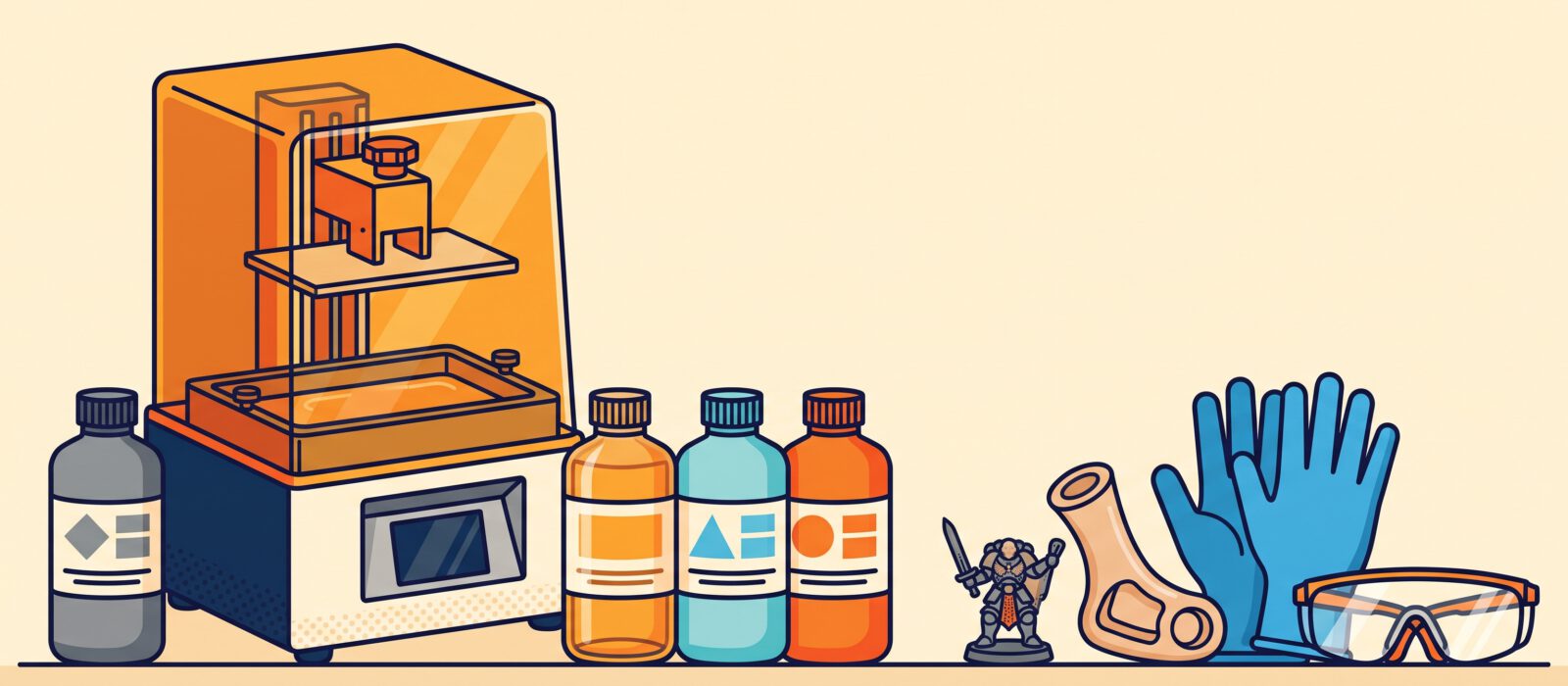
Resin printing gives smooth, highly detailed results, which is why it is popular for miniatures, jewelry masters and detailed models. But resin is not one material. It comes in several families with different strength, flexibility, cost and cleanup. This guide helps you pick the right one and use it safely.
Resin types compared
| Type | Strengths | Limitations | Best for |
|---|---|---|---|
| Standard resin | Excellent detail, low cost, easy | Brittle; strong smell | Miniatures, figures, display models |
| ABS-like resin | Tougher, less brittle | Slightly less detail, costs more | Functional prototypes, snap fits |
| Tough / engineering resin | High impact strength | More expensive; can need longer exposure | Brackets, enclosures, tools |
| Water-washable resin | Clean with water, less alcohol | Can absorb moisture and swell if left in water | Hobby miniatures, easier cleanup |
| Plant-based resin | Lower odor | Not always as strong | Indoor hobby use |
| Flexible resin | Rubbery, bendable | Hard to print, supports are tricky | Gaskets, wearables |
| Castable resin | Burns out cleanly in casting | Specialist; fragile | Jewelry masters |
Typical cost per 1 kg bottle (upper end of range)
Detail vs toughness (editorial rating out of 5)
What you need besides the resin
| Item | Purpose | Where to buy |
|---|---|---|
| Nitrile gloves and eye protection | Protect skin and eyes | Find on Amazon |
| Isopropyl alcohol (90 % or higher) | Washes uncured resin from prints | Find on Amazon |
| Wash and cure station | Cleans and hardens prints | Find on Amazon |
| Resin funnel and filters | Pours and filters resin | Find on Amazon |
| Plastic scraper | Removes prints and cleans the vat | Find on Amazon |
Where to buy resin
| Brand | Why people like it | Where to buy |
|---|---|---|
| Elegoo | Good value for Elegoo printers | Find on Amazon |
| Anycubic | Matches Anycubic printers | Find on Amazon |
| Siraya Tech | Popular tough and ABS-like resins | Find on Amazon |
| Phrozen | Performance-focused blends | Find on Amazon |
The resin printing workflow
- Level and prepare. Use the printer’s guided steps and shake the resin bottle.
- Slice and print. Use the profile for your resin and printer. Wear gloves when handling the vat.
- Wash. Rinse in isopropyl alcohol, or in water for water-washable resin.
- Cure. Harden under UV light for a few minutes.
- Remove supports and finish. See post-processing prints.
Common resin problems and fixes
| Symptom | Likely cause | Fix |
|---|---|---|
| Print will not stick to the plate | Underexposure or unlevel plate | Re-level, increase bottom layer exposure |
| Prints fall off mid-print | Too few supports | Add supports and angle the model |
| Layer lines or blur | Resin too cold | Warm the room or resin to about 25 °C |
| Sticky surface after curing | Insufficient wash or cure | Wash again, cure longer |
| Brittle prints | Standard resin | Use ABS-like or tough resin |
Still choosing between filament and resin? Read FDM vs Resin and our resin printer buying guide.
Frequently asked questions
Is resin printing safe at home?
It can be, with gloves, eye protection, ventilation and careful disposal of leftover resin. Keep it away from kids and pets.
Can I use any resin in any resin printer?
Most MSLA printers use 405 nm resins, but exposure settings differ, so use a profile for your printer.
How do I dispose of resin?
Cure leftover liquid resin and used wipes in sunlight or under UV until hard, then throw them away as solid waste. Follow local rules.
Is water-washable resin better?
It is easier to clean, but it can be more brittle and may absorb moisture. Standard resin with isopropyl alcohol often prints more consistently.