
Rhode Island’s $95M Payroll System Meltdown and Leadership Fallout

The Lead: Rhode Island’s Payroll System Crisis
In early 2026, Rhode Island’s state payroll system faced significant challenges, including incorrect paychecks, exposure of personal information, and administrative errors. These issues stemmed from the implementation of a new Enterprise Resource Planning (ERP) system, which, despite extensive planning and a $95 million budget, encountered unforeseen complications. The state’s Department of Administration (DOA) Director, Jonathan Womer, resigned amid these controversies, highlighting the severity of the situation. 【turn0search“`markdown
The Lead: Rhode Island’s Payroll Crisis
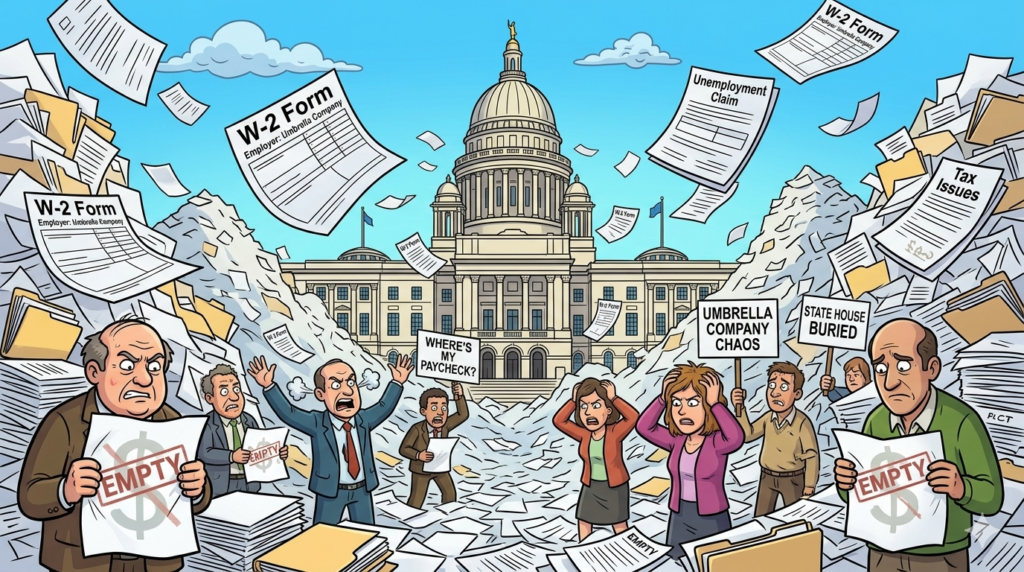
In early 2026, Rhode Island faced a mounting payroll crisis that shook public confidence in state government. The introduction of a $95 million Enterprise Resource Planning (ERP) system—designed to modernize decades-old payroll and human resources operations—resulted in widespread errors: underpaid employees, missing paychecks, incorrect tax documents, and even the exposure of Social Security numbers on mailed W‑2 forms.
Governor Dan McKee demanded accountability, ultimately requesting the resignation of Department of Administration (DOA) Director Jonathan Womer . As of March 2026, over 3,900 payroll-related complaints had been filed, with issues ranging from unpaid overtime to misapplied deductions . State unions, representing thousands of Rhode Island employees, decried the rollout as “a breakdown, not a mistake,” and legislators called for oversight hearings.
Historical Context: Technology Troubles in the Ocean State
Rhode Island’s payroll woes are not without precedent. State IT and administrative projects have a long history of turbulence:
- Legacy Systems: Until 2025, state payroll relied on a mainframe system coded in COBOL and supported by paper-based processes, including carbon copies and microfiche filings .
- Past IT Failures: The RIBridges benefits system, launched in 2016, suffered from years of errors, delayed payments, and federal scrutiny. Upgrades and “hyper care” support only stabilized the system in 2025 .
- ERP Planning: Rhode Island’s ERP project began in 2019, with Workday providing the cloud software and Accenture serving as the implementation partner. Despite six years of preparation, the payroll module’s December 2025 launch immediately generated pay errors .
Historically, Rhode Island’s compact size and tightly connected public workforce mean that statewide administrative issues rapidly become political crises. Errors in state employee paychecks ripple through local economies, as public employees constitute a significant portion of the labor force in cities like Providence, Cranston, and Warwick.
Stakeholder Analysis
State Officials
- Governor Dan McKee: Framed the payroll errors as a breach of trust and ordered leadership changes to restore confidence.
- DOA Leadership: Womer’s resignation reflects the political stakes, while interim director Tom Verdi—formerly a Providence Police commander—now oversees stabilization efforts .
- Legislators: Representatives like Julie Casimiro have called for formal oversight, citing the human toll of paycheck disruptions during winter months .
State Employees and Unions
- Council 94 (AFSCME): Representing 4,500 state workers, the union reported missing or incorrect paychecks, unpaid overtime, and delays in retirement contributions, calling the rollout a “management failure.”
- Brotherhood of Correctional Officers: Highlighted the dangers of asking high-risk employees to work without reliable pay, noting that some officers were shorted thousands of dollars .
- Individual Employees: Reports include workers missing entire pay cycles, frontline employees with medical conditions placed into leave-without-pay status due to system errors .
Broader Public and Economy
- Payroll errors strained confidence in state governance and created cascading effects in local economies, as delayed wages impact spending.
- Rhode Island’s unemployment rate held at 4.3% in December 2025, but payroll disruptions risk undermining retention and morale in critical sectors like corrections, health services, and education .
Future Outlook: The Next Decade
The long-term implications of the payroll crisis extend beyond IT stabilization:
- Financial Oversight and Risk Management
- Rhode Island may face state and federal penalties for late or inaccurate W‑2 filings, potentially reaching $698,500 per year under IRS guidelines .
- Independent audits and legislative oversight are likely to become standard practice for major IT projects.
- Labor Relations and Retention
- Unions are leveraging the crisis to demand contractual protections, faster issue resolution, and possibly hazard pay for affected workers.
- Prolonged issues risk an exodus from state service, particularly in corrections and public safety roles.
- Technology Governance Reform
- The crisis will likely accelerate the professionalization of Rhode Island’s IT governance, emphasizing continuous testing, vendor accountability, and iterative rollouts rather than “big bang” launches.
- Lessons from ERP stabilization may inform future system migrations, from tax collection to benefits administration.
- Public Trust and Political Ramifications
- With a gubernatorial election on the horizon, the payroll crisis could become a defining issue, especially if employees remain undercompensated or taxpayers bear the cost of mismanagement.
If successfully resolved, the ERP system promises a more efficient, integrated, and transparent financial infrastructure for Rhode Island. However, the experience illustrates that modernization, without adequate testing and change management, can become a liability rather than a legacy.